
Whole milk is now officially back on some local district menus
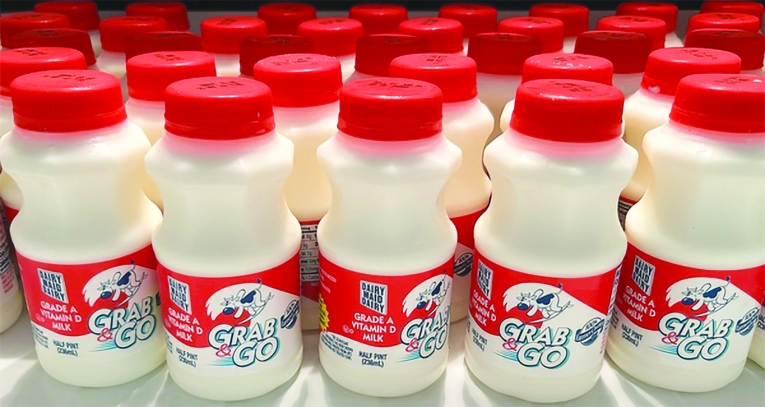
Erin and Kaleb Rodgers, owners of Twin Knobs Dairy in Vanzant, have been doing their part to assist in bringing whole milk back to local school district menus.
As of Monday, June 22, Erin Rodgers said Mountain Grove, Mansfield, Ava, Dora, Ozark and Springfield school districts are 100% in on returning to whole milk.
“I am super excited for our schools in our (area) that we have whole milk for our kids,” Erin Rodgers said. “...Whole milk makes for healthy kids.”
The couple is currently the chair couple for the National Milk Producers Federation (NMPF) National Young Cooperators (YC) program.
The Dairy Farmers of America, Inc. farmers recently represented young dairy farmers across the country as they visited Washington D.C. for the NMPFs YC event.
This allowed them to connect directly with legislators to talk about the industry. The Rodgers milk around 150-200 cows, with a mix featuring Jersey cows and some Jersey-Holstein cross cattle.
The following was submitted by Erin
Rodgers, from the National Dairy Council:
“The Whole Milk for Healthy Kids Act of 2025, signed into law in January 2026, expands the types of milk schools may offer as part of the National School Lunch Program. Schools may now offer a broader range of fluid milk options, including whole and reduced-fat milk, while continuing to meet federal nutrition standards.
These updates provide schools with greater flexibility to support nutrient intake, student choice and diverse preferences, while maintaining compliance with USDA meal pattern guidelines.
The 2025–2030 Dietary Guidelines for Americans (the Guidelines) recommend three daily servings of dairy as a core component of a healthy dietary pattern. Dairy foods like milk, cheese and yogurt provide a health-promoting bundle of nutrients including high-quality protein, essential vitamins and minerals, and healthy fats.
The guidelines include nutrient-dense dairy foods across a range of fat levels as options to choose from within balanced eating patterns.
What changed and why it matters?
Schools participating in the National School Lunch Program may offer students a wider range of milk options at lunch, including:
• Whole (3.25%) milk
• Reduced-fat (2%) milk
• Low-fat (1%) milk
• Fat-free milk
• Lactose-free dairy milk
• Nondairy beverages that are nutritionally equivalent to dairy milk
Schools are required to offer at least two different milk options daily, with flexibility to include flavored or unflavored and organic or nonorganic milk options.
Saturated fat from fluid milk is excluded from the weekly saturated fat limit for school meals. This provides schools flexibility to offer whole and reduced-fat milk while remaining within federal nutrition standards. Of note, the other nutrition and calorie limits remain unchanged, and there’s a difference of roughly 45 calories between whole and 1% milk.
Why this matters:
• Students may be more likely to choose and drink milk they prefer
• Greater choice may help increase overall nutrient intake
• Schools can better accommodate diverse student preferences and nutritional needs